
Mitigation Strategy
Construct a seawall
Overview
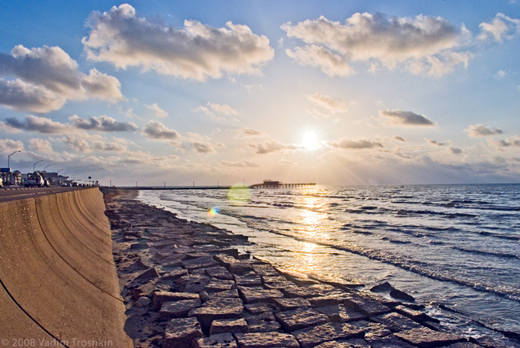
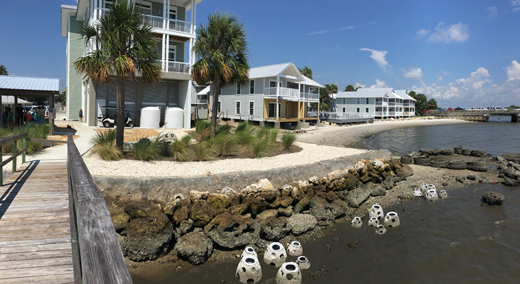
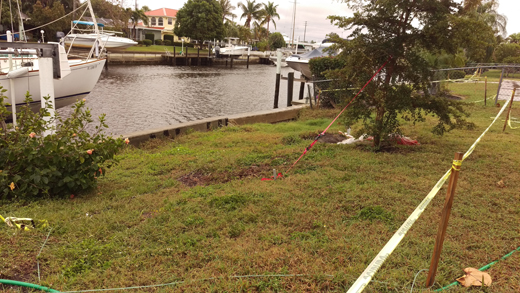
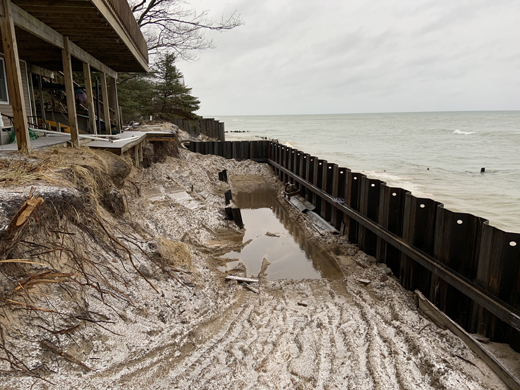
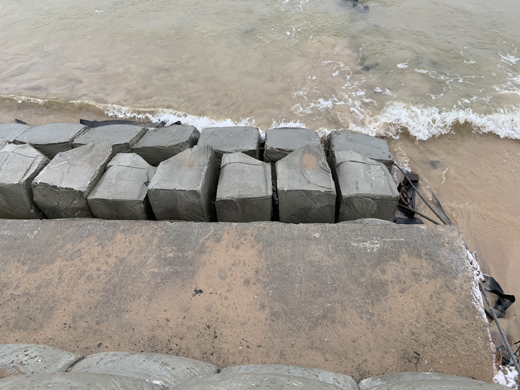
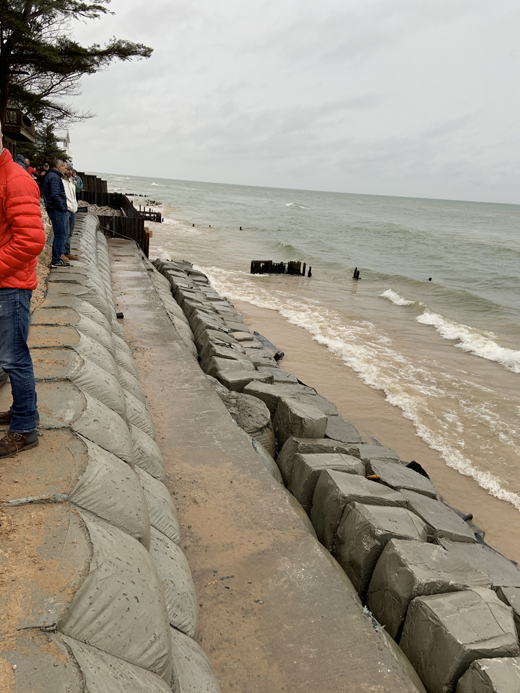
A seawall is a solid vertical or sloping barrier built parallel to the coastline to protect the inland area from wave action, erosion, and flooding. Seawalls are heavily engineered, permanent structures that must be sturdy enough to withstand strong waves. They vary in size, type, and construction material, depending upon the features of the environment in which they will be constructed and the degree of flood protection needed. Types include monolithic concrete barriers, brick or block walls, rubble mound structures, or steel sheet pile walls. The texture of the surface of the seawall can impact the performance of the seawall – irregular surfaces disperse incoming wave energy in different directions, whereas smooth surfaces reflect the full force of the wave back in one direction. A deep foundation and deeply buried earth anchors can enhance seawall stability.

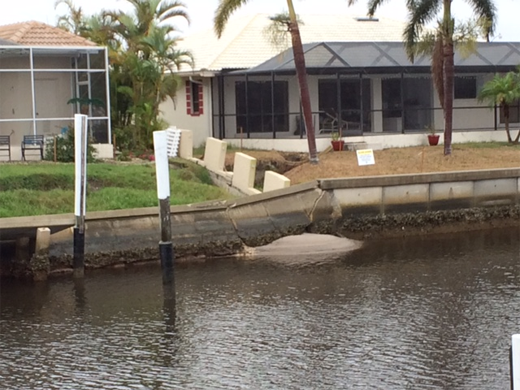
Seawalls are mostly used where further shoreline erosion could cause costly, severe damage or where other beach erosion protection methods have failed or would be inadequate. However, these structures should not be used where wave action can overtop the structure, causing substantial soil and sand erosion, and thereby weakening the seawall, which could result in its failure and significant inland flooding.
The main advantage of seawalls is that they are highly effective at protecting against erosion and flooding. Additionally, they are a long-term solution (provided that there is proper maintenance), and do not take up much space, unlike other coastal defenses. A major disadvantage of seawalls is that they are expensive to design, construct, and maintain.
Seawalls also can cause erosion of the beaches fronting the structure due to changes in water flow, and prevent beach replenishment by interrupting the transfer of sediment from inland to shore. At the boundaries of the wall, erosion affects the natural ground, creating a stepped appearance along the beach, and impacting neighboring properties. Another problem caused by the permanent, structural nature of seawalls is that they impact the natural habitat (e.g., interfering with habitat migration in response to sea level rise), resulting in reduced habitat diversity. Seawalls may also make it more difficult for emergency services and people with disabilities to access the beach.



Property Characteristics
Property Scale
Neighborhood
Single Property
Real Estate Type
Single-family residence
Business
Government building
Foundation Type
Slab-on-Grade
Crawlspace
Open Foundation
Basement
Property Location
Coastal
Past Flood Depth
Moderate
Deep
Debris Flow Potential
Yes
Structure Condition
Fair-to-excellent condition
Implementation Factors
Annual Maintenance Required
Low
Action Required If Flood Is Imminent
No, Passive
Relative Cost
$$$$$
Level of Effort
Professional

Next Steps
- Contact your community’s floodplain administrator to find out whether there are any local ordinances prohibiting or restricting seawall construction and whether a local permit is required to construct one. (You may also want to contact your local coastal management administrator or water management specialist to see if they have any additional requirements before you begin your project.) If you are not sure who to talk to, check out our “who to contact” page.
- If seawall construction is allowed, hire a certified engineer to design and a qualified contractor to build your seawall. Make sure your contractor obtains all necessary permits.
Special Considerations
- There may be local ordinances that restrict or prohibit the construction of seawalls due to their impact on the beachfront (particularly if it is public land) and neighboring properties. Ensure compliance with all applicable National Flood Insurance Program (NFIP) requirements and local building codes. The NFIP sets minimum standards and allows individual communities to adopt their own additional or more stringent requirements via local floodplain management ordinances, regulations, and laws.
- Contact a local flood insurance representative to learn more and get a quote, if you do not already have flood insurance. (Most homeowner’s insurance policies do not cover flood damage.)
- Be careful not to redirect water flow from your property onto another property. No adverse impact (NAI) floodplain management is an approach that ensures the action of any property owner, public or private, does not adversely impact the property and rights of others. NAI calls for any adverse impact caused by a project to be mitigated as part of the project. By following NAI principles, you can: prevent flooding from increasing or damaging others; see a reduction in flood losses over time; and avoid challenges and lawsuits over causing or aggravating a flood problem.
- Renters and those who own specific types of property may be limited in which mitigation options they can undertake or have different requirements to which they must adhere. If you are a renter or own any of the following listed property types, click through to learn more: Renter; Unit in a multifamily residence; Manufactured home; Farm/ranch; Historic property; New construction.
Reduce Flood Risk
https://www.reducefloodrisk.org/mitigation/building-and-maintaining-seawalls/
Printed: 05/21/2026
 EN
EN  ES
ES