
Mitigation Strategy
Construct an earthen levee
Overview
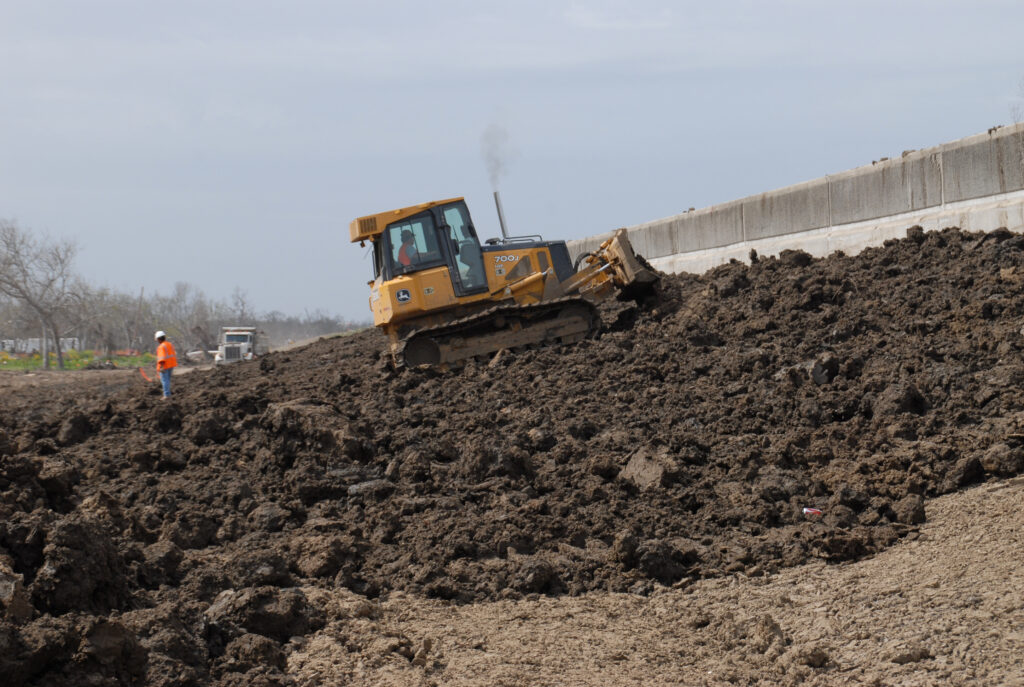
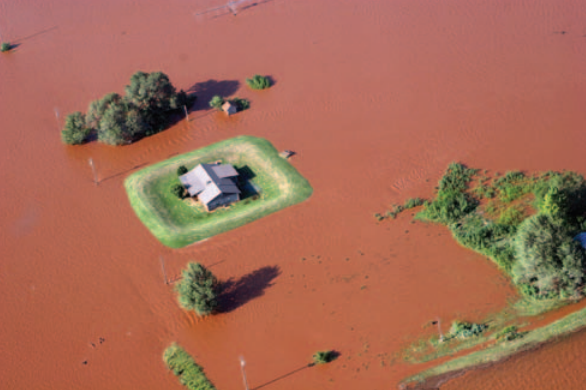
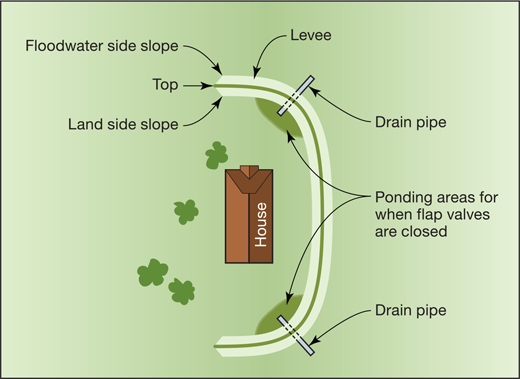
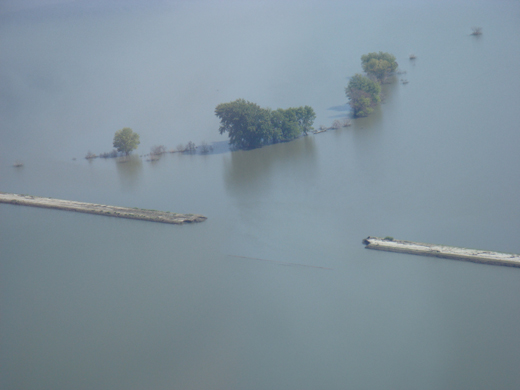
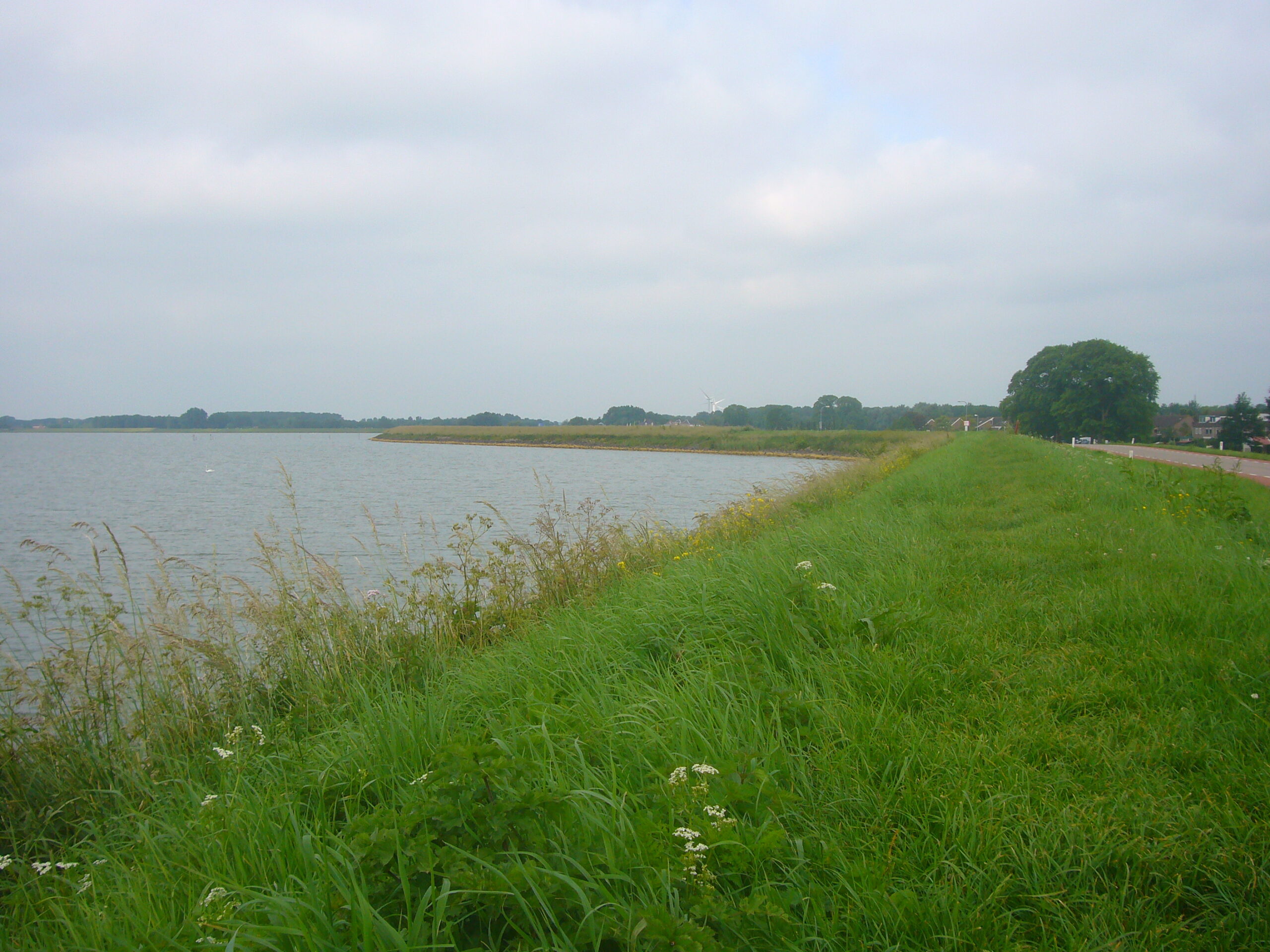
A levee is a physical barrier constructed to block floodwaters from entering an area and coming into contact with a structure(s). Levees can be constructed to protect a large area, such as a group of buildings or farmstead, or just one structure, such as a house. An earthen levee is a type of levee made of compacted soils that do not easily allow water to pass through them; this type of soil is known as “impervious soil,” and typically classified as clays. Levees that are built parallel to the flood source are required to have their upstream segment tie into existing high ground, and the downstream section must either tie into high ground or be extended farther downstream so that floodwaters cannot flow around the end of the levee. Most levees are designed to protect against a specific frequency of flooding (e.g., 50-, 100-, or 500-year). Due to uncertainty associated with future flood conditions, such as precipitation, runoff, and flood stage, levees are typically constructed with additional height, referred to as “freeboard.”
The greater the velocity or depth of the floodwater, the greater the height of the levee required to withstand it. As levee height increases, so does the amount of land it must occupy in order to be stable and the amount of material needed to construct it, which will increase the cost. (The cost also increases with the distance that material must be hauled for construction.) To be effective, levees must have internal drainage and side slopes that are not too steep; otherwise, the levee will be unstable since the water pressure acting on the levee increases along with the depth of floodwater. In areas where floodwaters could reach high velocities or there is significant wave action, the floodwater side of the levee needs a protective covering of rock (known as riprap) or other material that can help prevent erosion. Note, however, other than grass, no vegetation such as trees or shrubs should be allowed to grow on a levee, as their root systems provide seepage paths for floodwaters to follow, increasing the risk of failure. Animals should be prevented from burrowing in a levee as well since this also provides seepage paths for floodwaters to compromise a levee.
Unlike other large-scale mitigation options, levees do not require significant changes to the structure(s) being protected; and the residents and commercial businesses located away from the levee construction zone can continue to live and operate as usual during and after the construction process. Since levees constructed to protect a single structure, or a small group of structures such as a farmstead, require a lot of land area, the total construction cost may be more than the average homeowner can afford or have the land area to accommodate. To continue to provide protection against flooding, levees must be inspected and maintained annually, including before, during, and after a flood. Potential problems to check for are cracks, seepage, erosion, and animal burrows.


Property Characteristics
Property Scale
Single Property
Neighborhood
Real Estate Type
Single-family residence
Multi-family residence
Manufactured home
Business
Government building
Agricultural building
Foundation Type
Crawlspace
Basement
Open Foundation
Slab-on-Grade
Property Location
Coastal
Past Flood Depth
Moderate
Shallow
Unsure
Debris Flow Potential
Yes
Unsure
Structure Condition
Fair-to-excellent condition
Implementation Factors
Annual Maintenance Required
Medium
Action Required If Flood Is Imminent
Yes, Active
No, Passive
Relative Cost
$$$$
$$$$$
Level of Effort
Professional
Next Steps
- Contact your local government to learn more about your property’s flood history and Base Flood Elevation, and to determine if an earthen levee is permissible. If it is, what federal, state and local permitting, code or ordinance requirements will you need to follow? Make sure to learn this information before any work starts. If you are not sure who to talk to, check out our “who to contact” page. Your community’s floodplain management administrator also may be able to provide guidance as you search for a licensed professional engineer and/or contractor.
- Hire a licensed professional engineer to design and certify the levee. You may need the engineer to include an opening in the levee in the design to provide vehicle access to the structure(s) being protected.
- Hire a qualified contractor to construct the levee. Make sure all necessary permits are obtained.
- Check with your local government to determine any specific requirements for the operation and maintenance of the levee.
Special Considerations
- Earthen levees may: fail or be overtopped by large or long-lasting floods; affect local drainage, possibly causing flood-related problems for neighbors; and restrict access to the structure during a flood event.
- Be careful not to redirect water flow from your property onto another property. No adverse impact (NAI) floodplain management is an approach that ensures the action of any property owner, public or private, does not adversely impact the property and rights of others. NAI calls for any adverse impact caused by a project to be mitigated as part of the project. By following NAI principles, you can: prevent flooding from increasing or damaging others; see a reduction in flood losses over time; and avoid challenges and lawsuits over causing or aggravating a flood problem.
- Levees may not be the best option if located close to homes with basements since the soil around the home can become saturated and exert hydrostatic pressure on below-ground walls and floors, causing them to possibly crack, buckle, or collapse. Special design considerations are needed for levees surrounding a structure with a basement.
- Ensure compliance with all applicable National Flood Insurance Program (NFIP) requirements and local building codes. The NFIP sets minimum standards and allows individual communities to adopt their own additional or more stringent requirements via local floodplain management ordinances, regulations, and laws. Unless the levee is accredited through Title 44 CFR § 65.10, it cannot be used to bring an existing home with a first floor elevation below the BFE into compliance with NFIP regulations, bring new buildings into compliance with NFIP regulations, nor reduce flood insurance premiums. (Levees do not eliminate the flood insurance requirement for homes with federally backed mortgages.)
- Levees cannot be used to bring a Substantially Improved or Substantially Damaged home into compliance with NFIP requirements or your community’s floodplain management ordinance or law.
- Check out the financial assistance page to see what funding or financing opportunities might be available to you.
Reduce Flood Risk
https://www.reducefloodrisk.org/mitigation/construct-an-earthen-levee/
Printed: 05/10/2026
 EN
EN  ES
ES