
Mitigation Strategy
Demolish the structure and rebuild
Overview
To demolish a structure is to knock it down and remove it from the floodplain and harm’s way. Any structure rebuilt on-site must be treated as new construction and built in compliance with National Flood Insurance Program (NFIP) standards, local building codes, and any other applicable floodplain management standards, to reduce its risk of flooding in the future. The NFIP sets minimum building standards and allows individual communities to adopt their own additional or more stringent requirements via local floodplain management ordinances, regulations, and laws; you may hear these referred to as “higher standards.”
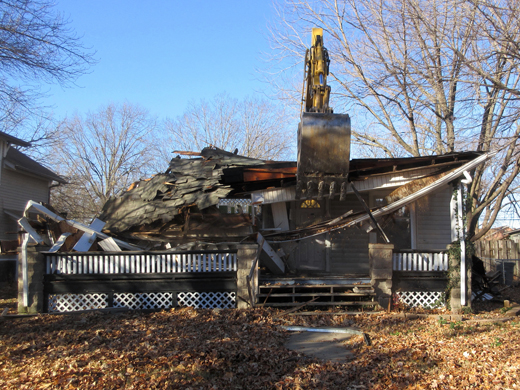
In the case of properties that have flooded repeatedly, modifications to a structure might not be sufficient to prevent flood losses. Frequent flood events that impact a structure can lead to costly repairs and repeated disruptions for residents. Property owners with repetitive or extensive flood damage need to be mindful of the local, state, and federal regulations regarding NFIP substantial damage and substantial improvement requirements. These structures – whether demolished or not – are required to be rebuilt in compliance with NFIP, state, and local standards.
Demolishing a flood-prone structure is the most successful way to prevent further flood losses or damage. If you choose to demolish your home or building and the demolition is not performed as part of a government-funded property acquisition project – which prohibits rebuilding at the acquired location – a new structure can be built on the lot in compliance with the NFIP and all other floodplain management standards. If your building was flooded and insured through the NFIP with a Standard Flood Insurance Policy, Increased Cost of Compliance (ICC) coverage can help cover the costs, up to $30,000, to construct the new structure in accordance with the latest state and local floodplain management ordinances or laws.


Property Characteristics
Property Scale
Single Property
Neighborhood
Real Estate Type
Single-family residence
Business
Government building
Foundation Type
Basement
Open Foundation
Slab-on-Grade
Crawlspace
Property Location
Any
Past Flood Depth
Shallow
Deep
Moderate
Debris Flow Potential
Yes
Structure Condition
Less than fair condition
Implementation Factors
Annual Maintenance Required
Low
Action Required If Flood Is Imminent
No, Passive
Relative Cost
$$$
$$$$
Level of Effort
Professional
Next Steps:
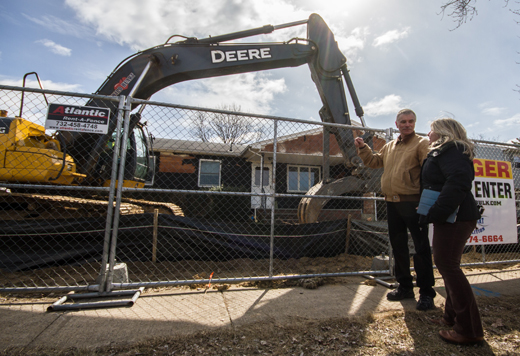
- Hire a demolition company to demolish your structure.
- Consult your local floodplain management officials to learn about applicable NFIP standards, local building codes, permitting, and any other floodplain management standards and requirements.
- Hire a local registered design professional to design your new home or structure.
- Hire a local qualified contractor to build your new home or structure.
Special Considerations:
- Ensure compliance with all applicable National Flood Insurance Program (NFIP) requirements and local building codes. The NFIP sets minimum standards and allows individual communities to adopt their own additional or more stringent requirements via local floodplain management ordinances, regulations, and laws.
- Be careful not to redirect water flow from your property onto another property. No adverse impact (NAI) floodplain management is an approach that ensures the action of any property owner, public or private, does not adversely impact the property and rights of others. NAI calls for any adverse impact caused by a project to be mitigated as part of the project. By following NAI principles, you can: prevent flooding from increasing or damaging others; see a reduction in flood losses over time; and avoid challenges and lawsuits over causing or aggravating a flood problem.
- Renters and those who own specific types of property may be limited in which mitigation options they can undertake or have different requirements to which they must adhere. If you are a renter or own any of the following listed property types, click through to learn more: Renter; Unit in a multifamily residence; Manufactured home; Farm/ranch; Historic property; New construction.
Reduce Flood Risk
https://www.reducefloodrisk.org/mitigation/demolish-the-structure-and-rebuild/
Printed: 05/19/2026
 EN
EN  ES
ES