
Mitigation Strategy
Install bioswales
Overview
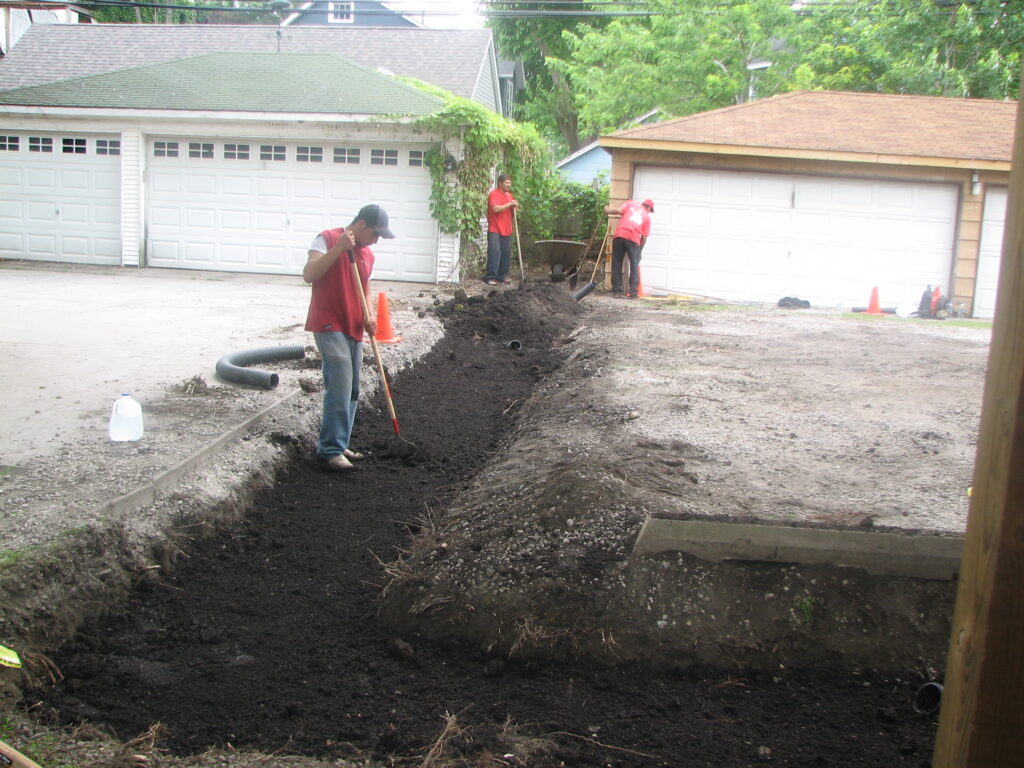
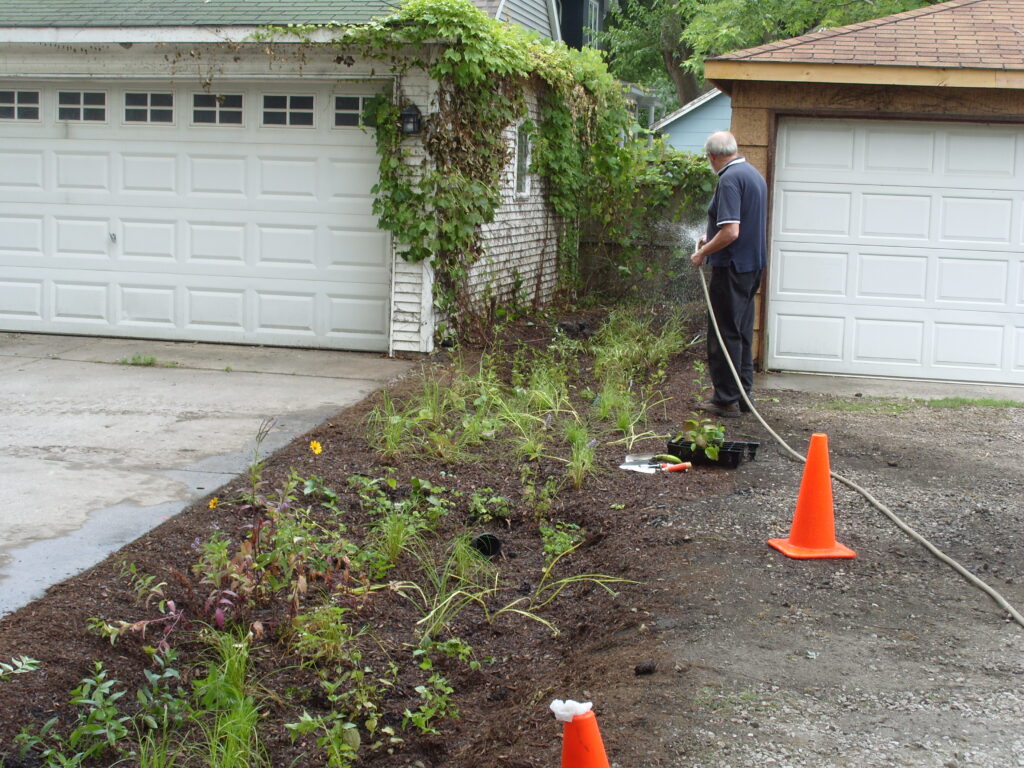
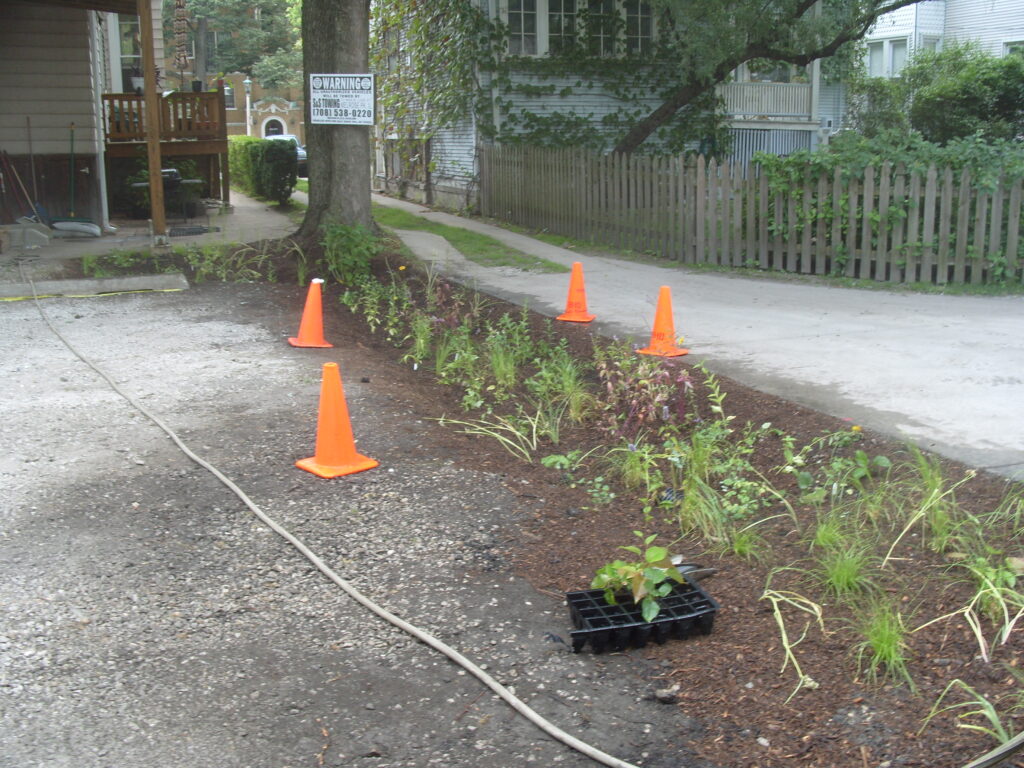
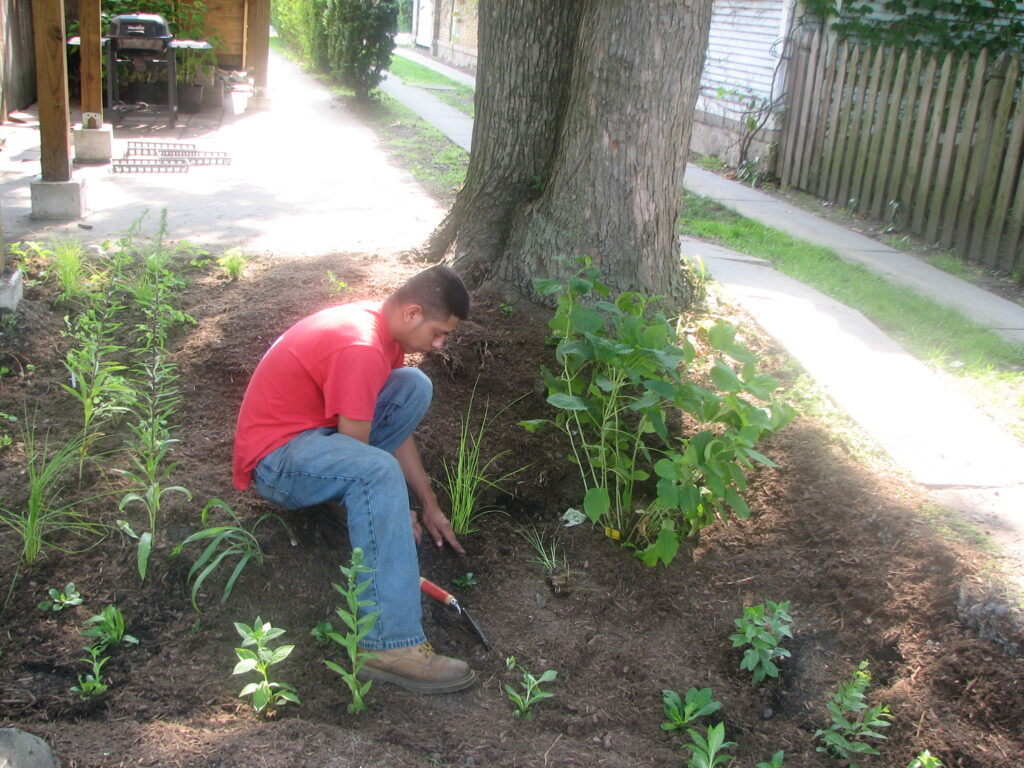
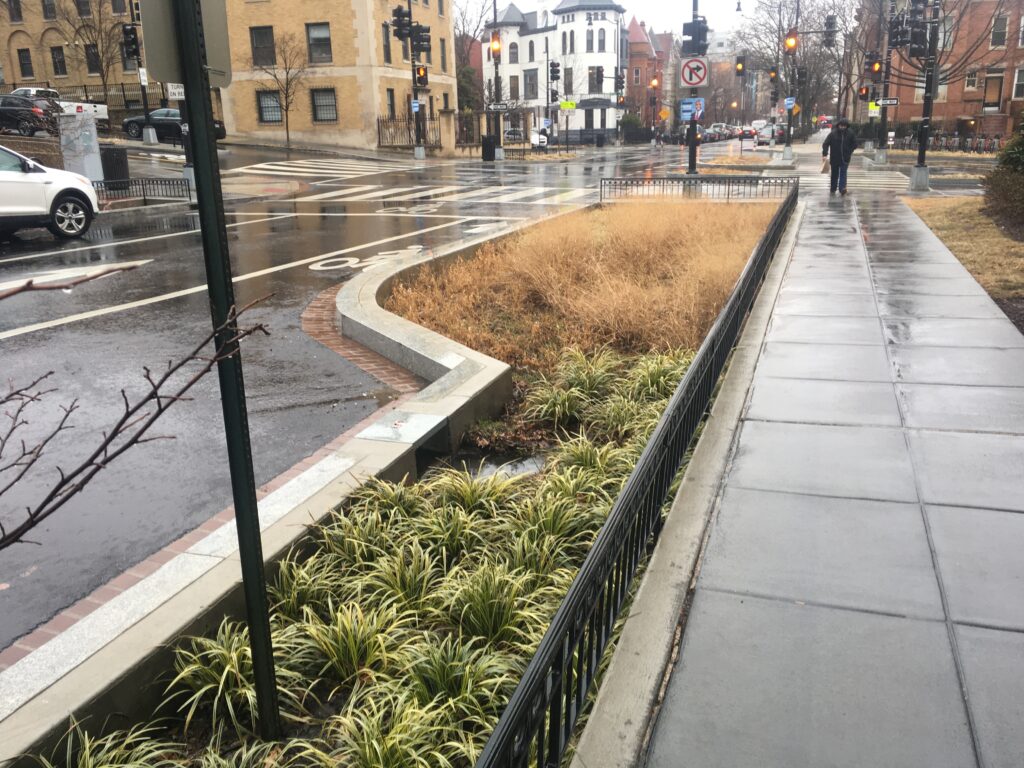
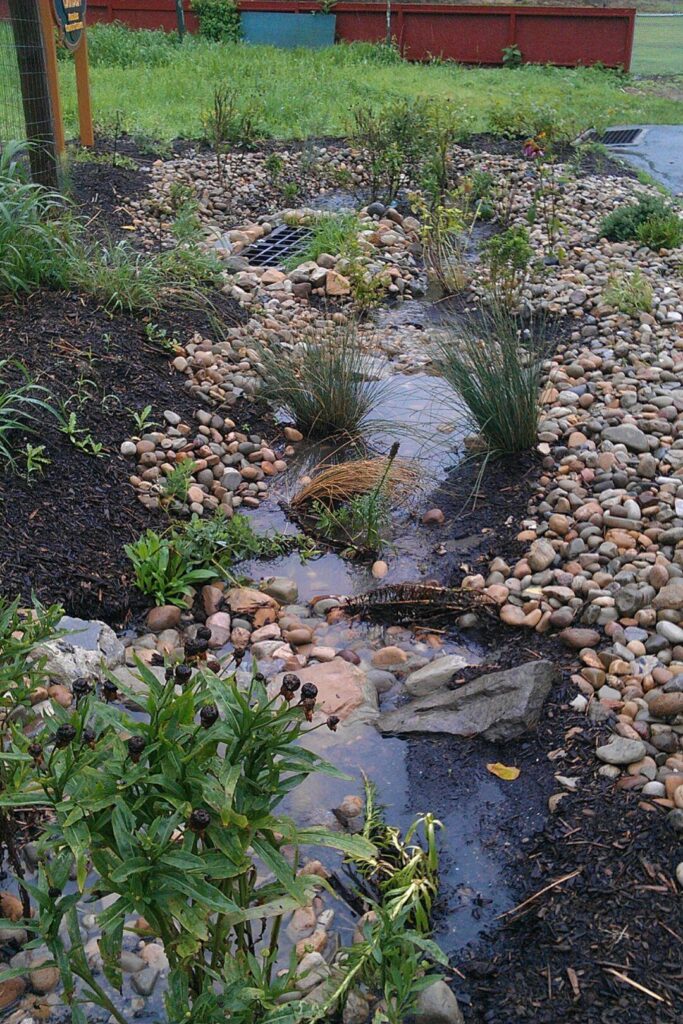
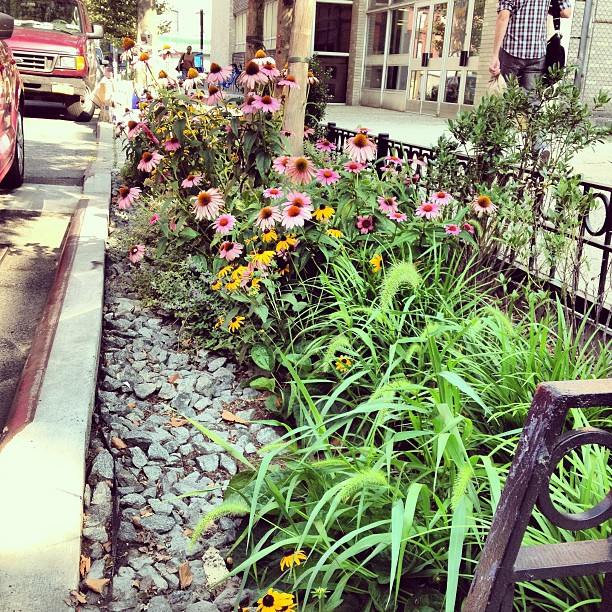
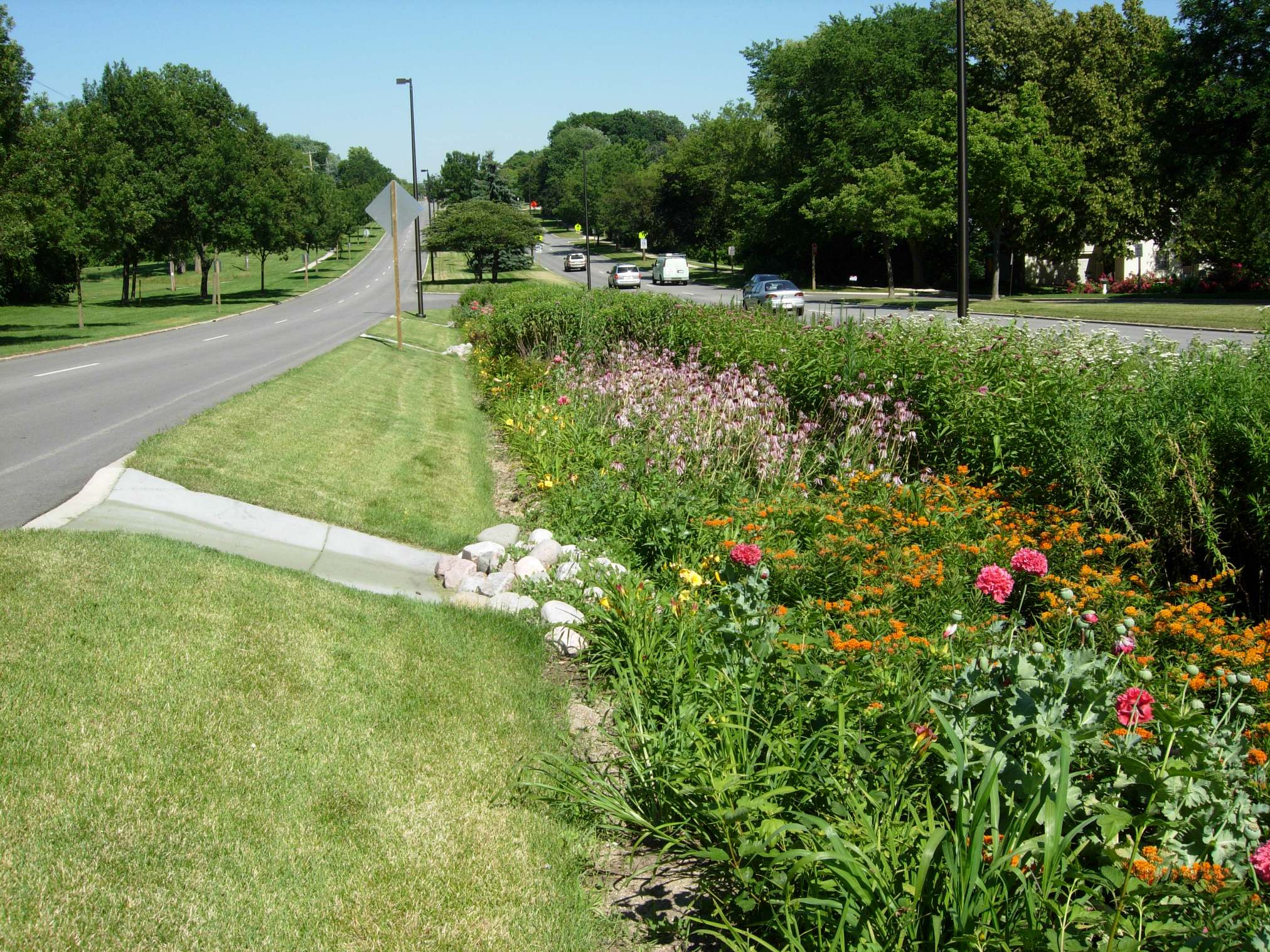
Bioswales, also known as “vegetated swales,” are landscape features similar to rain gardens. Bioswales are designed to capture runoff coming from larger areas of impervious surfaces, such as streets and parking lots. Like rain gardens, they use native plants to help absorb water and prevent erosion. However, they have more complicated design features than rain gardens, such as layers of engineered soil and gravel, perforated pipe underdrains, and overflow structures to help handle runoff from heavier storms. Whereas rain gardens are typically designed to have a bowl shape to capture and store rainwater as it infiltrates into the soil, bioswales are designed to be linear in shape to capture rainwater, slow it down, and deliver it to a designated area such as a rain garden, filtering out pollution along the way. Bioswales are more effective alternatives to concrete gutters and storm sewers.
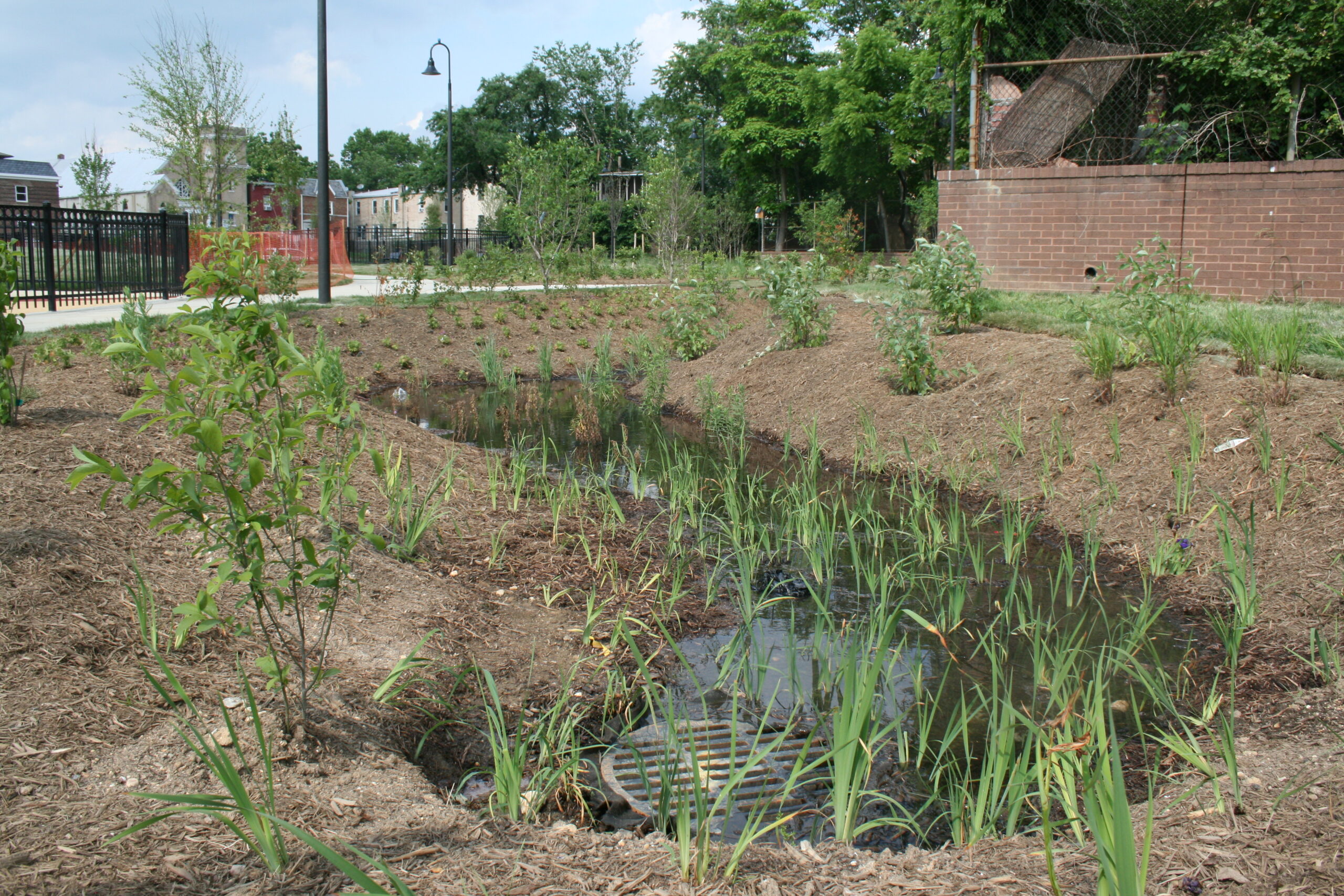
Bioswales reduce the risk of flooding and drainage problems, protect streams and lakes from pollution, provide habitat for pollinators and birds, and improve air quality, while also beautifying the neighborhood. Bioswales are not appropriate in areas with steep or unstable slopes due to the risk of erosion. They must be constructed in areas with a slope no greater than five percent. Heavy, dense vegetation provides the most effective filtration, making native plants the best option for a bioswale. Permeable materials (such as gravel) may be added below the channel to increase storage capacity. For this reason, bioswales work best when installed in parking lots, along roadways and sidewalks, or as an enhancement to natural or existing drainage swales.
Costs associated with bioswales include both installation costs and annual maintenance costs. Maintenance costs may be reduced by using native grasses and plants that are already adapted to the area, requiring less water, no fertilizer, and infrequent mowing. When mowing, it is important not to mow the vegetation to below the design flow depth. For this reason, property owners and maintenance personnel must be educated about the design and function of the bioswale (along with “do not mow” signage, if applicable).
Bioswales must be inspected periodically to make sure that the channel has enough vegetation and that there are no blockages to continue to work properly. Inspections should be performed annually and after any major storms to check for bare soil, erosion, sediment, and debris. Sediment buildup in bioswales must be removed periodically; otherwise the site may eventually need regrading to restore the proper flow.
Property Characteristics
Property Scale
Neighborhood
Single Property
Real Estate Type
Single-family residence
Manufactured home
Business
Government building
Agricultural building
Foundation Type
Slab-on-Grade
Crawlspace
Basement
Property Location
Coastal
Past Flood Depth
Shallow
Unsure
Debris Flow Potential
Yes
Unsure
Structure Condition
Fair-to-excellent condition
Implementation Factors
Annual Maintenance Required
Low
Action Required If Flood Is Imminent
No, Passive
Relative Cost
$$
$$$
Level of Effort
Professional
Next Steps
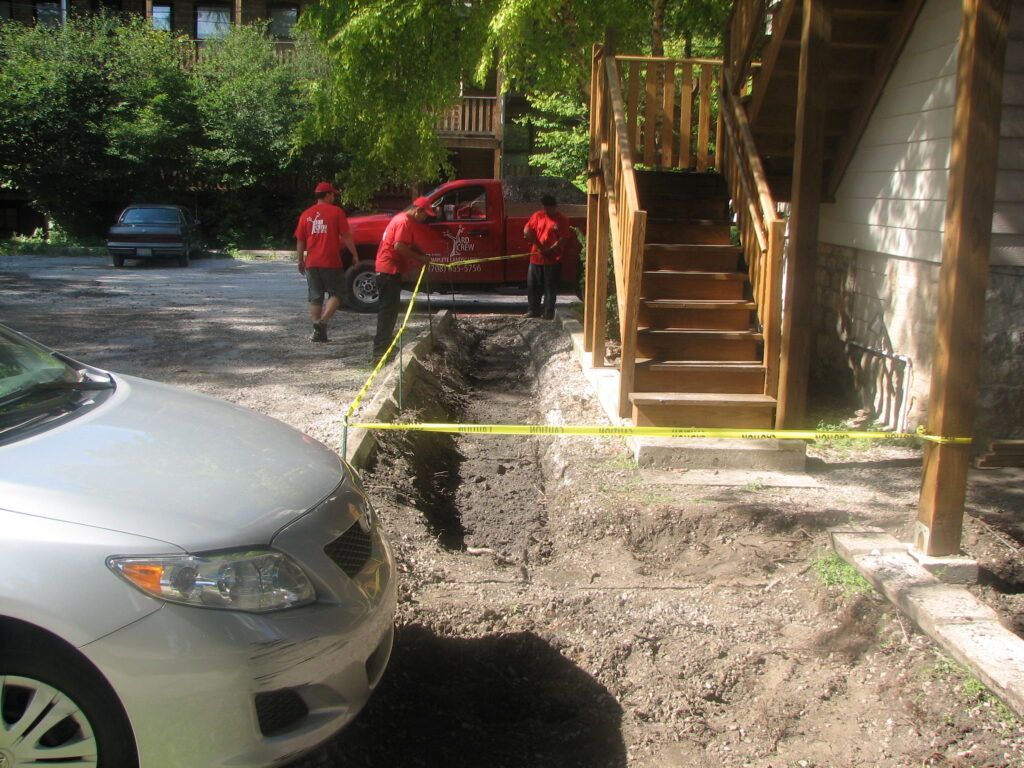
- Employ a qualified engineering service and landscape architect to ensure that the bioswale is designed and built correctly.
- Contact your community’s floodplain management administrator and building inspector for assistance in identifying qualified engineering services and landscape architects.
Special Considerations
- Design criteria, land use regulations, zoning ordinances, and building permits need to be investigated to determine the constructability and affordability of implementing a bioswale.
Reduce Flood Risk
https://www.reducefloodrisk.org/mitigation/install-bioswales/
Printed: 05/29/2026
 EN
EN  ES
ES