
Mitigation Strategy
Install underground water storage tanks
Overview
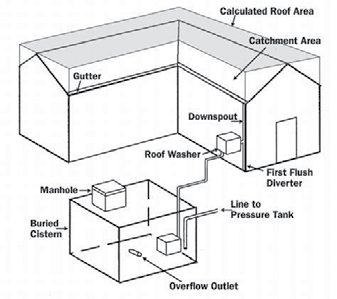
Underground water storage tanks and rainwater cisterns are underground areas constructed of metal or reinforced concrete and buried below parking lots or open green spaces to a depth of possibly greater than a hundred feet. They can help reduce flood risk to individual buildings or a group of buildings by collecting runoff, slowing the discharge of water into the ground, promoting infiltration and groundwater recharge, and preventing surface erosion, which can occur if runoff is left unchecked. These storage tanks are typically built in the area of shopping malls, medical centers, universities, or other similar types of development, and hold several times as much water as dry wells.
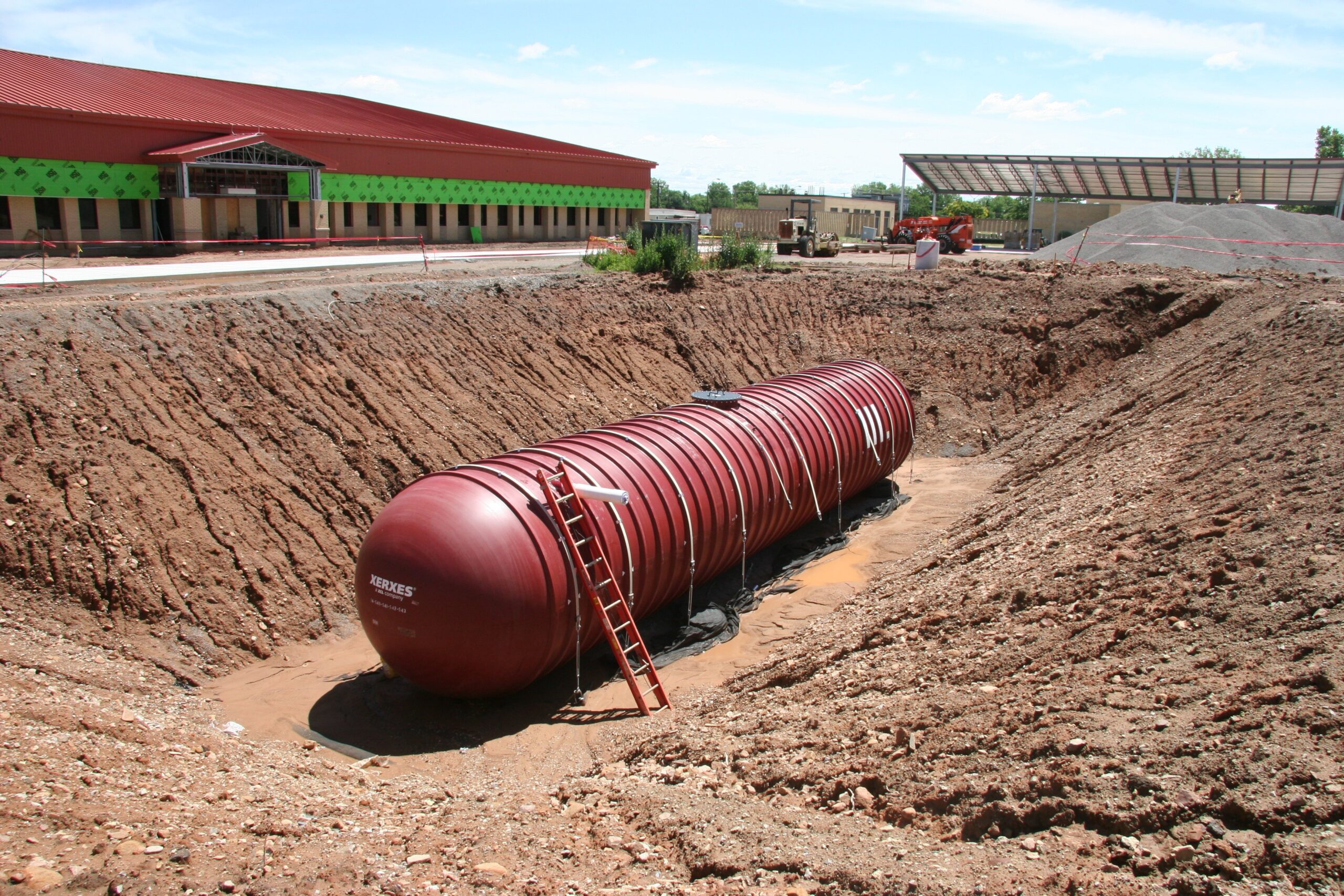
An underground water storage tank most commonly collects runoff from a group of buildings. It temporarily stores the water before slowly releasing it into the surrounding soil, similar to an above-ground retention and detention basin. As the storage tank fills with rooftop runoff or surface flows, the water slowly percolates into the surrounding ground and is discharged by submersible pumps into natural drainage ditches or channels. (Given this design, they also filter out pollutants.)
Underground water storage tanks are generally large and high-capacity so they work well in areas where space is not limited. They rely on the collected water being absorbed by the surrounding soil; therefore, they are only a good option if a permeable layer of soil is found within a reasonable depth. If no permeable soil layer exists, an underground water storage tanks might not be a good solution.

Property Characteristics
Property Scale
Neighborhood
Single Property
Real Estate Type
Business
Government building
Foundation Type
Crawlspace
Basement
Slab-on-Grade
Property Location
Non-coastal
Past Flood Depth
Moderate
Shallow
Deep
Unsure
Debris Flow Potential
Yes
Unsure
Structure Condition
Fair-to-excellent condition
Less than fair condition
Implementation Factors
Annual Maintenance Required
Medium
Action Required If Flood Is Imminent
No, Passive
Relative Cost
$$$
$$$$
$$$$$
Level of Effort
Professional

Next Steps
- Contact your local government to learn more about your property’s flood history and Base Flood Elevation, and to determine what federal, state and local permitting, code or ordinance requirements you will need to follow, before any work starts. If you are not sure who to talk to, check out our “who to contact” page. Your community’s floodplain management administrator also may be able to provide guidance as you search for a qualified engineer and/or contractor.
- Hire a qualified engineering service to determine runoff characteristics to figure out and design the right size and location for your storage tank. Design criteria, land use regulations, zoning ordinances, and permits may dictate the size and location of the underground water storage tank.
- Hire a qualified contractor to install the underground water storage tanks. Make sure all necessary permits are obtained.
- Check with your local government to determine any specific requirements for the maintenance of underground water storage tanks.
Special Considerations
- Be careful not to redirect water flow from your property onto another property. No adverse impact (NAI) floodplain management is an approach that ensures the action of any property owner, public or private, does not adversely impact the property and rights of others. NAI calls for any adverse impact caused by a project to be mitigated as part of the project. By following NAI principles, you can: prevent flooding from increasing or damaging others; see a reduction in flood losses over time; and avoid challenges and lawsuits over causing or aggravating a flood problem.
- Check out the financial assistance page to see what funding or financing opportunities might be available to you.
Reduce Flood Risk
https://www.reducefloodrisk.org/mitigation/install-underground-water-storage-tanks/
Printed: 06/19/2026
 EN
EN  ES
ES